
Using AI to Develop the Younger Generation: A Practical Guide for Parents, Educators, and Young People
AI is not replacing the younger generation - it is empowering them. From personalised learning to creative skill-building and early career development, here is how AI tools are being used right now to prepare young people for a future that demands adaptability, creativity, and technical fluency.
Using AI to Develop the Younger Generation: A Practical Guide for Parents, Educators, and Young People
There is a 14-year-old in Accra who uses Claude to help her understand calculus concepts her class has not covered yet. A 17-year-old in London is building a mobile app with the help of GitHub Copilot - he has never taken a formal coding class. A 12-year-old in Texas creates digital illustrations using AI art tools and sells them as custom phone cases online.
These are not prodigies. They are ordinary young people who happen to have access to extraordinary tools.
Artificial intelligence is the most powerful learning accelerator the younger generation has ever had access to. But like any powerful tool, its impact depends entirely on how it is used. Used well, AI can help young people learn faster, develop creative skills earlier, prepare for careers that do not yet exist, and build confidence in their ability to figure things out.
Used poorly - or not at all - it becomes either a crutch or a missed opportunity.
This guide is for parents, educators, and young people who want to use AI intentionally and effectively for genuine development.
Why AI Matters for Youth Development Right Now
The world the younger generation is growing into looks nothing like the one their parents prepared for:
- 65% of children entering primary school today will work in job types that do not yet exist (World Economic Forum)
- AI literacy is becoming as fundamental as digital literacy was a decade ago - employers are already listing it as a preferred skill
- The half-life of professional skills is shrinking - what you learn in university may be outdated within five years of graduation
- Creativity, critical thinking, and adaptability are rising in value while routine cognitive tasks are being automated
AI does not just help young people learn existing subjects better - it helps them develop the meta-skills they will need to thrive in a world of constant change.

How AI Is Being Used to Develop Young People Right Now
1. Personalised Academic Learning
Traditional education delivers one lesson to thirty students. AI delivers a customised learning experience to each individual.
What this looks like in practice:
- A student struggling with algebra asks ChatGPT or Claude to explain quadratic equations using basketball statistics - suddenly the concept clicks because it connects to something they care about
- A student ahead of the curriculum uses AI to explore advanced topics at their own pace, without waiting for the rest of the class
- A student with a learning difference gets explanations in the format that works best for them - visual diagrams, step-by-step breakdowns, audio explanations, or simplified language
Recommended AI learning tools for young people:
| Tool | Best For | Age Range |
|---|---|---|
| Khan Academy + Khanmigo | Maths, science, test prep | 10–18 |
| Claude | Research, writing feedback, concept explanation | 13+ |
| Duolingo | Language learning | 8+ |
| Photomath | Step-by-step maths solutions | 10–18 |
| Quizlet AI | Flashcards and study aids | 12+ |
For parents: The goal is not for AI to do homework - it is for AI to help your child understand the material deeply enough to do the homework themselves. The right question is not "Did you finish your assignment?" but "Can you explain what you learned to me?"
2. Creative Skill Development
One of the most exciting applications of AI for young people is creative development. AI tools are lowering the barrier to entry for creative skills that previously required years of training or expensive equipment.
Writing and Storytelling Young writers can use AI to:
- Get feedback on drafts - "What is weak about this paragraph? How can I make this character more interesting?"
- Overcome writer's block - "Give me five different opening lines for a mystery story set in a school"
- Learn writing techniques - "Show me an example of foreshadowing, then help me add it to my story"
- Edit and improve - "Help me make this essay more concise without losing the main argument"
The key distinction: AI as a writing coach, not a ghostwriter. Young people who use AI to improve their own writing develop stronger skills than those who skip the writing process entirely.
Visual Arts and Design
- AI image generation tools help young artists explore styles, generate reference images, and create concept art
- Tools like Canva's AI features allow teenagers to create professional-quality designs for school projects, small businesses, or personal brands
- Young people interested in fashion, architecture, or product design can rapidly prototype visual ideas
Music and Audio
- AI music tools help young musicians compose, arrange, and produce music without expensive studio equipment
- Young people can learn music theory by experimenting with AI composition tools
- Podcast production becomes accessible with AI-powered editing and transcription
3. Technical Skill Building
AI is dramatically accelerating how quickly young people can learn technical skills - particularly coding and data analysis.
Learning to Code with AI
The old way: spend weeks reading documentation, getting stuck on error messages, and losing motivation before building anything meaningful.
The new way: describe what you want to build, let AI help you create a working version, then learn by modifying and improving it.

This approach works because:
- Young people see results immediately, which sustains motivation
- They learn by doing rather than by reading abstract documentation
- Error messages become learning opportunities when AI explains what went wrong and why
- They can build projects they actually care about from day one
Practical coding projects for young people using AI assistance:
- Age 10–13: Simple website for a hobby, basic calculator app, text-based adventure game
- Age 14–16: Personal portfolio website, weather app, social media bot, simple mobile app
- Age 17–19: Full web application, data analysis project, automation tools, API integrations
Important principle: AI should help young coders understand their code, not just generate it. Encourage the practice of reading every line AI produces and asking "Why did it do this?" until they understand.
4. Career Exploration and Preparation
Young people today face a paradox: more career options than any previous generation, but less clarity about which to pursue. AI helps bridge this gap.
AI-Powered Career Exploration:
- "I enjoy solving puzzles, I'm good at maths, and I like working with people. What careers should I explore?"
- "What does a day in the life of a biomedical engineer actually look like?"
- "What skills do I need to become a UX designer, and how can I start learning them now?"
- "What are the fastest-growing careers in Louisiana/Nigeria/the UK that combine technology and healthcare?"
Interview and Application Preparation:
- Practise mock interviews for specific roles and industries
- Get feedback on CVs and personal statements
- Research companies and industries before applications
- Draft professional emails and networking messages
Freelancing and Entrepreneurship: Young people with AI fluency can start earning money through:
- Content writing and editing services
- Graphic design for local businesses
- Social media management
- Basic web development
- Data entry and analysis
- Virtual assistance
A 16-year-old who can write well with AI assistance, create graphics with Canva, and manage social media accounts is already more capable than many entry-level marketing hires. This is not hypothetical - thousands of young people globally are building real income streams using these exact skills.
5. Emotional Intelligence and Self-Development
Perhaps the most underappreciated use of AI for young people is as a tool for self-reflection and emotional development.
How young people are using AI for personal growth:
- Journaling prompts tailored to their current challenges
- Processing complex emotions by writing about them and asking AI for perspective
- Learning conflict resolution by role-playing difficult conversations
- Building self-awareness by exploring personality traits and learning styles
- Developing empathy by asking AI to explain different perspectives on issues they care about
Important caveat: AI is not a therapist and should never replace professional mental health support. But as a tool for self-reflection and emotional literacy, it can be remarkably valuable - especially for young people who are not comfortable talking to adults about certain topics.
A Framework for Responsible AI Use by Young People
The power of AI comes with responsibilities. Here is a practical framework for parents and educators:
The 3 Rules for Young People Using AI
Rule 1: Use AI to learn, not to skip learning
- If you cannot explain what AI helped you create, you have not learned anything
- Always read, understand, and be able to defend any AI-assisted work
- The goal is to become more capable, not more dependent
Rule 2: Verify everything AI tells you
- AI can be wrong, outdated, or biased
- Always check facts against reliable sources
- Develop the habit of asking "How do I know this is accurate?"
Rule 3: Be honest about AI use
- If a school or employer has rules about AI use, follow them
- Credit AI assistance where appropriate
- Never present AI-generated work as entirely your own
Age-Appropriate AI Access Guide
| Age Group | Recommended Approach |
|---|---|
| 8–12 | Supervised use with parent present. Focus on educational tools (Khan Academy, Duolingo). Introduction to what AI is and how it works. |
| 13–15 | Guided independence. Access to general AI tools with regular check-ins. Focus on learning enhancement and creative projects. Discuss digital literacy and verification. |
| 16–18 | Independent use with accountability. Career exploration, skill building, and project development. Regular conversations about ethical use and critical thinking. |
What Parents Can Do Right Now
Start Using AI Yourself
You cannot guide your child's AI use if you do not understand it yourself. Spend 30 minutes with ChatGPT or Claude. Ask it to help you with something real - planning a meal, understanding a work concept, or drafting a difficult email. Experience what your child experiences.
Have the Conversation
Ask your child:
- "What AI tools do your friends use?"
- "Have you ever used AI for schoolwork? Show me how."
- "What is the most interesting thing you have done with AI?"
Do not start with restrictions. Start with curiosity. Understand how they are already using these tools before deciding what guardrails to add.
Create Learning Challenges
Instead of worrying about AI misuse, channel your child's interest into productive challenges:
- "Can you use AI to help you learn a new skill this month?"
- "Try building something with AI assistance and show me how it works"
- "Use AI to research a topic you care about and teach me what you learned"
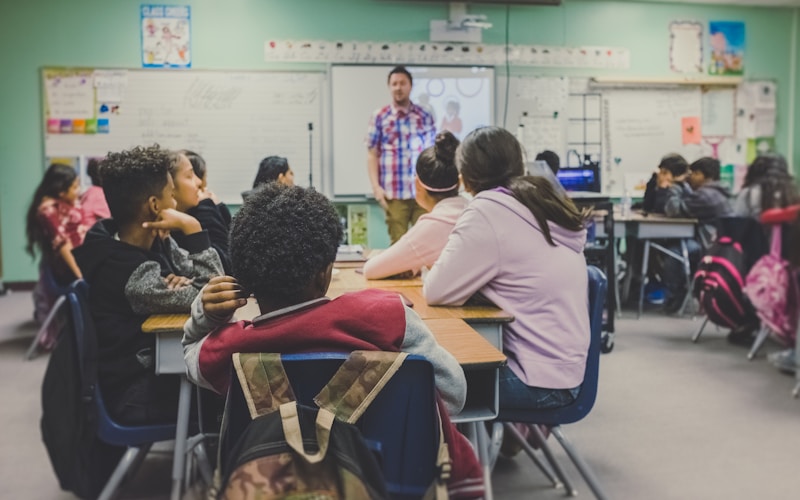
What Educators Can Do Right Now
Integrate AI Into Assignments
Rather than banning AI, design assignments that require AI use in productive ways:
- "Use AI to research three perspectives on this historical event, then write your own analysis explaining which you find most convincing and why"
- "Generate a first draft using AI, then improve it by hand. Submit both versions with annotations explaining your changes"
- "Use AI to help you understand a concept beyond our syllabus, then present what you learned to the class"
Teach AI Literacy
Add these skills to your teaching:
- How to write effective prompts
- How to evaluate AI-generated information for accuracy
- How to identify AI bias and limitations
- When AI use is appropriate versus when it undermines learning
- The ethics of AI in academic and professional contexts
Use AI for Your Own Teaching
AI can help educators:
- Create differentiated materials for different learning levels
- Generate quiz questions and practice problems
- Draft lesson plans and rubrics
- Provide additional support for students who need extra help
The Bigger Picture: Preparing for 2030 and Beyond
The younger generation entering the workforce in the late 2020s and early 2030s will face a world where:
- AI will be a standard workplace tool - as normal as email or spreadsheets
- The ability to direct AI effectively will be a core professional skill - not a specialty
- Continuous learning will be mandatory - career-long education, not just university
- Human skills will be more valuable, not less - empathy, creativity, leadership, and ethical judgment cannot be automated
- Those who start early will have a compound advantage - five years of AI fluency by age 20 creates a significant edge
The young people who learn to use AI as a development tool - not just an entertainment tool - will have advantages that compound over their entire careers.
Getting Started: A 30-Day AI Development Challenge for Young People
Week 1: Explore
- Try 3 different AI tools (ChatGPT, Claude, Canva AI)
- Use AI to learn something new about a subject you find difficult
- Ask AI to explain a career you are curious about
Week 2: Create
- Use AI to help you write a short story, essay, or blog post
- Create a design or artwork with AI assistance
- Build a simple project (website, presentation, or app) with AI help
Week 3: Develop
- Use AI to practise a skill you want to improve
- Create a personal development plan with AI guidance
- Practise a mock job interview or scholarship application
Week 4: Reflect
- Write about what you learned this month
- Identify which AI tools were most useful and why
- Set goals for how you will continue using AI for development
Conclusion
AI is not the future. It is the present. The younger generation that learns to use it wisely will not just be prepared for the future - they will be the ones shaping it.
The choice for parents and educators is not whether young people will use AI. They already are. The choice is whether we help them use it intentionally for genuine development, or leave them to figure it out alone.
Start the conversation. Provide the guidance. Trust them with the tools. The younger generation is more capable than we give them credit for - and with AI as a development partner, they can go further than any generation before them.
Want to learn more about how AI can benefit your family, school, or organisation? Contact the NeX Consulting Team for guidance on AI integration and digital skills development.
External Resources:
Tags:
Ready to Implement These Strategies?
Our team of experts can help you turn these insights into real, measurable results for your business.